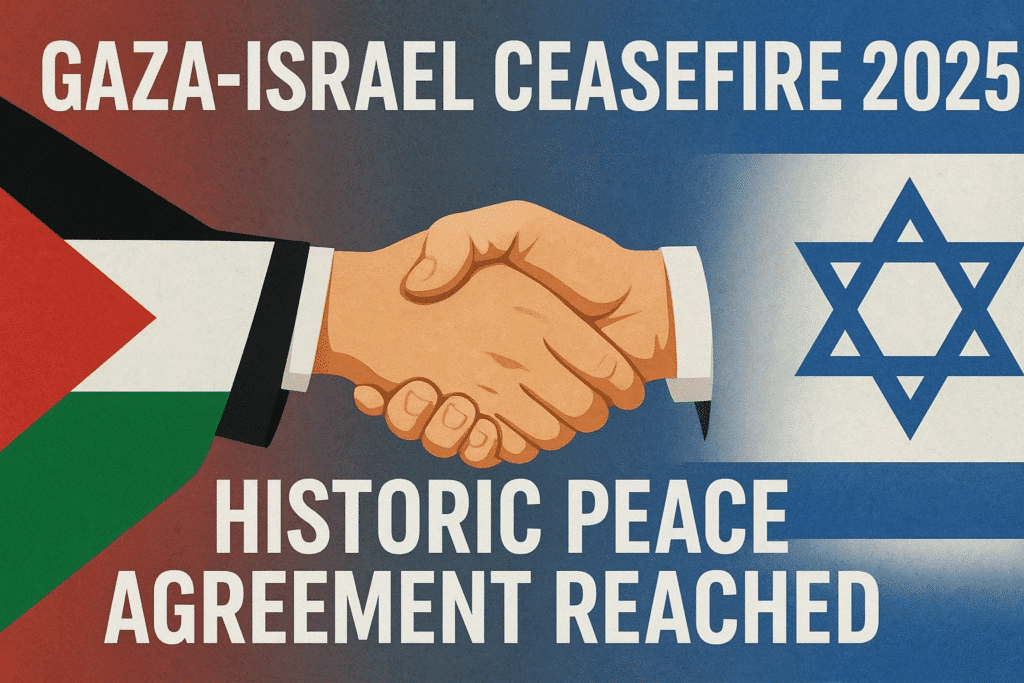
Introduction of the Israel ceasefire 2025
The 2025 Gaza-Israel ceasefire marks a historic moment in Middle East peace efforts. Following President Donald Trump’s peace plan, Israel and Hamas agreed on terms that could reshape the region’s stability.
Thank you for reading this post. Don't forget to subscribe!
In a historic development, Israel and Hamas have reached a landmark ceasefire agreement, officially announced on October 9, 2025. This breakthrough comes after more than two years of continuous warfare that claimed over 67,000 Palestinian lives and caused widespread destruction across the Gaza Strip.
The truce — hailed globally as a major diplomatic milestone — marks the first tangible progress under President Donald Trump’s 20-point peace plan, raising renewed hopes for stability and coexistence in the region.
The Signing Ceremony in Sharm el-Sheikh
The ceasefire deal was signed in Sharm el-Sheikh, Egypt, following three days of intensive negotiations. Representatives from Israel, Hamas, Qatar, Egypt, and the United States played crucial roles in mediating the final terms.
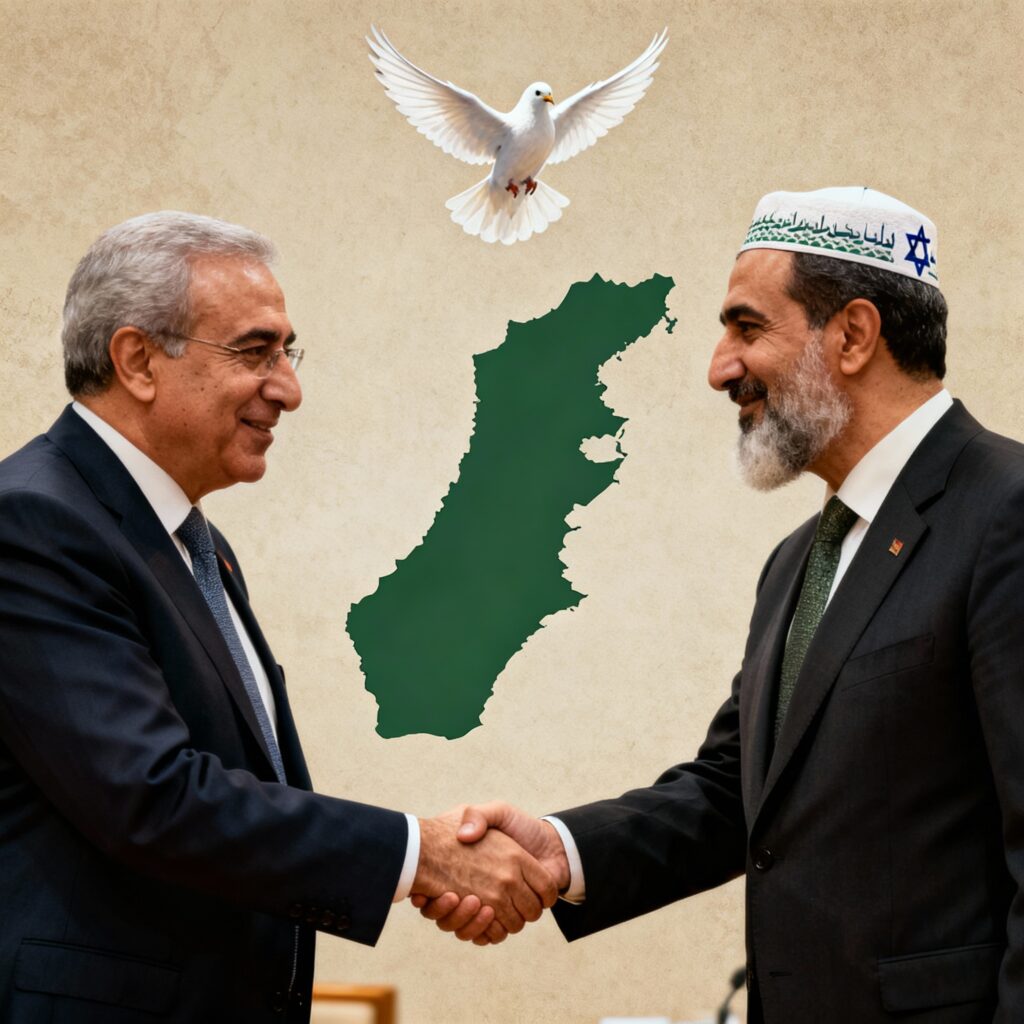
Diplomatic sources confirmed that Egyptian President Abdel Fattah el-Sisi and Qatari Prime Minister Sheikh Mohammed bin Abdulrahman Al Thani were instrumental in brokering the final round of talks.
The United Nations and the European Union have both welcomed the agreement, describing it as a significant step toward long-term peace and humanitarian recovery.
Key Provisions of the Ceasefire Agreement
- Effective Timeline:
The ceasefire is set to take effect within 24 hours after the Israeli Cabinet officially ratifies the agreement. - Hostage-Prisoner Exchange:
- Hamas will release all 20 surviving Israeli hostages within 72 hours.
- In return, Israel will free approximately 2,000 Palestinian prisoners currently detained in Israeli facilities.
- Israeli Troop Withdrawal:
- The Israel Defense Forces (IDF) will withdraw to an “agreed-upon line” known as the Yellow Line, covering nearly 60% of Gaza’s territory.
- Israel will maintain security oversight in this zone until further peace arrangements are finalized.
- Humanitarian Aid Expansion:
- Up to 600 aid trucks per day will enter Gaza carrying food, fuel, and medical supplies.
- The focus will be on rebuilding hospitals, schools, bakeries, and water facilities destroyed during the conflict.
International Response and Global Impact
World leaders across the globe have praised this accord as a turning point for Middle East diplomacy.
- President Donald Trump called it “a moment of truth for lasting peace”, emphasizing the U.S. role in drafting the 20-point plan that led to this breakthrough.
- United Nations Secretary-General António Guterres urged both sides to “respect the truce and focus on human recovery.”
- The European Union has pledged a $1.5 billion humanitarian aid package to help rebuild Gaza’s civilian infrastructure.
Neighboring nations such as Jordan and Saudi Arabia have also expressed optimism that this could pave the way for broader regional normalization efforts.
Voices from Gaza and Israel
On the ground, the reactions have been mixed but cautiously hopeful.
- In Gaza, residents celebrated in the streets, chanting for peace and unity after years of airstrikes and blockades.
- In Tel Aviv, some families of the released hostages expressed relief but urged the government to remain vigilant against future aggression.
Local media outlets across the region described the ceasefire as a fragile yet vital foundation for rebuilding trust and cooperation between the two sides.
The Road Ahead: Challenges and Opportunities
While this agreement is historic, experts warn that its success will depend on consistent diplomatic engagement and accountability from all parties involved.
Security analysts point out that previous ceasefire attempts between Israel and Hamas have faltered due to mistrust, border violations, and political instability. However, this time, the international oversight mechanism—including monitoring teams from the U.N., Egypt, and Qatar—offers a new layer of enforcement.
If both sides adhere to the agreed framework, the Gaza-Israel ceasefire could become a blueprint for future peace models in the Middle East.
The Gaza humanitarian aid plan includes over 600 trucks of supplies daily. This initiative, part of the Sharm el-Sheikh agreement, underscores the seriousness of both sides in achieving long-term peace in the Middle East.
Conclusion
The 2025 Gaza-Israel ceasefire represents more than just a halt in fighting — it’s a symbol of renewed hope for millions of civilians who have endured immense suffering. With international support, humanitarian assistance, and continued diplomatic will, this historic agreement could mark the beginning of a more peaceful and stable era in the region.
you can see other post: see Other post
Gaza Israel ceasefire BBC News 🙂 Click Now
About the Author