India’s Diplomatic Shift: Taliban Foreign Minister Amir Khan Muttaqi’s Visit Sparks Debate
In a major diplomatic development, Afghanistan’s Taliban Foreign Minister Amir Khan Muttaqi visited India this week, marking one of the most significant engagements between the two countries since the Taliban’s return to power in 2021.
Thank you for reading this post. Don't forget to subscribe!
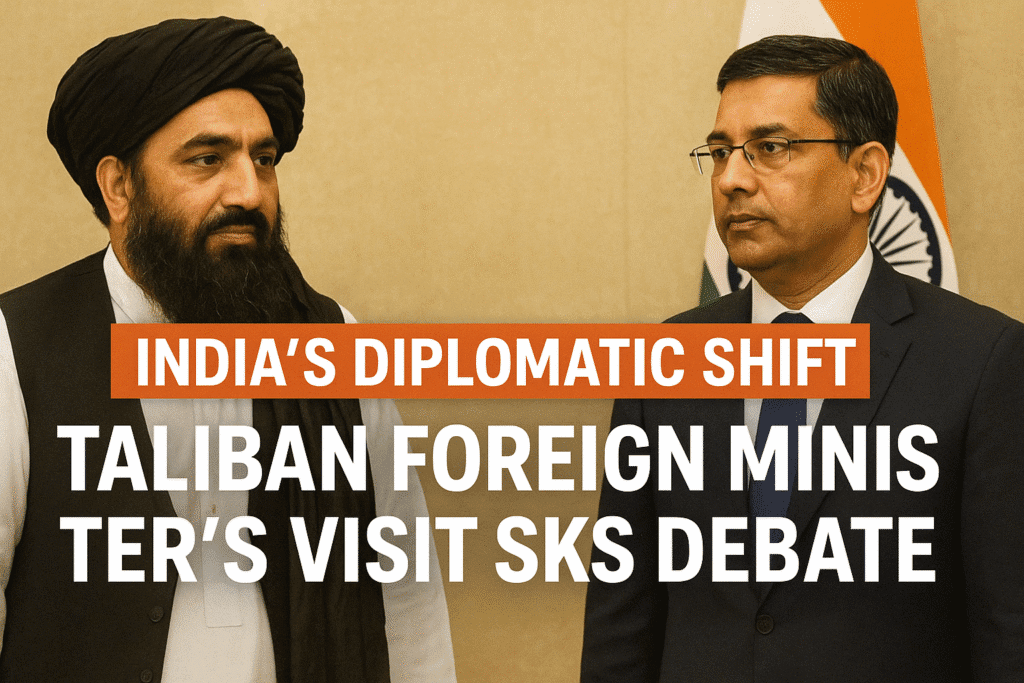
Taliban India relations 2025
This high-profile visit signals India’s growing willingness to re-engage with Afghanistan’s new rulers — a move that has sparked both optimism and controversy within political and public circles.
🔹 Background: A Turning Point in Taliban-India Relations
For years, India maintained limited contact with the Taliban government in Kabul, focusing mainly on humanitarian assistance and trade through Iran’s Chabahar Port.
However, with Afghanistan’s geopolitical importance and regional security concerns rising, India is now cautiously expanding its diplomatic presence. Reports suggest that India may upgrade its technical mission in Kabul to a full embassy, signaling a gradual normalization of ties.
🔹 The Press Conference Controversy
During Amir Khan Muttaqi’s visit, a press conference in New Delhi became the center of controversy after reports emerged that no women journalists were allowed to attend.
This decision drew sharp criticism from activists and media associations across India.
The Indian Ministry of External Affairs (MEA) clarified that the event was organized by the Afghan delegation, not by the Indian government, distancing itself from the exclusion of women reporters.
This incident has reignited discussions around gender rights and press freedom, especially given India’s democratic values and its stance on women’s empowerment globally.
🔹 Key Takeaways from the Meetings
According to official reports and media sources (Reuters, AP, TOI), several key topics were discussed between the two sides:
- Trade and connectivity: Focus on expanding trade via Chabahar Port and regional supply chains.
- Diplomatic representation: Plans to reopen or upgrade the Indian mission in Kabul.
- Regional security: Counter-terrorism, humanitarian assistance, and India’s role in Afghan reconstruction.
- Humanitarian cooperation: Ongoing aid for healthcare and education in Afghanistan.
While India has not officially recognized the Taliban government, its pragmatic engagement indicates a shift toward “constructive diplomacy” rather than isolation.
🔹 Political Reactions in India
The visit and subsequent events have led to mixed political reactions within India.
Several opposition leaders questioned the optics of welcoming a Taliban representative, citing concerns over human rights and women’s freedoms under the Taliban regime.
On the other hand, foreign policy experts argue that India cannot afford to remain disengaged, given Afghanistan’s strategic importance in South Asia and its proximity to Pakistan and China.
🔹 India’s Strategic Balancing Act
India’s current approach appears to be a strategic balancing act — maintaining humanitarian and diplomatic engagement without extending full recognition.
This strategy aligns with the global position of most countries, which are watching how the Taliban handles women’s education, minority rights, and terrorism concerns before taking the next step.
🔹 What Lies Ahead
As the situation evolves, analysts believe that India–Taliban relations in 2025 will focus on economic stability, regional security, and people-to-people connectivity.
However, India faces a delicate challenge — supporting Afghan development without compromising its core democratic principles.
The latest press conference controversy serves as a reminder that while diplomatic engagement is necessary, values and human rights must remain central to India’s foreign policy vision.
🗞️ Conclusion
The Taliban–India dialogue in 2025 marks the beginning of a complex, cautious, and high-stakes diplomatic phase.
India’s approach will likely remain measured and conditional, balancing regional interests with global expectations of democracy and inclusivity.
Whether this new phase brings long-term stability or deeper tensions will depend on how both sides manage their next steps — and how the world responds.
Starlink Satellites Deorbit at Unprecedented Rate: See More
Why Taliban minister’s visit to India:) See Other Post
About the Author