Introduction
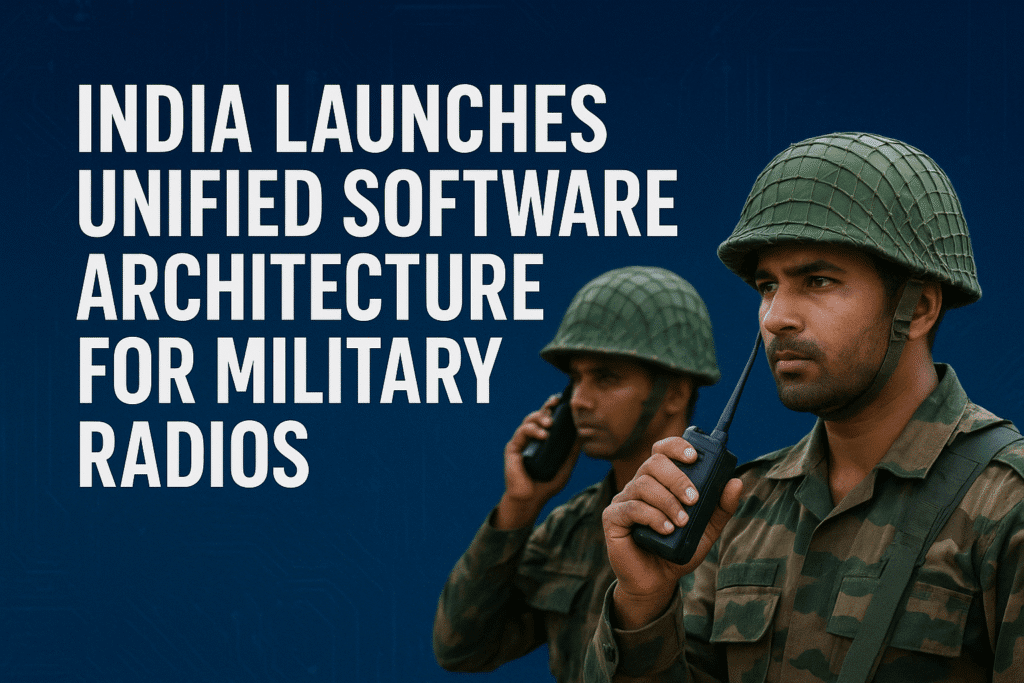
In a major step towards strengthening communication security, India has launched a Unified Software Architecture (USA) for its military radios. This initiative aims to integrate all branches of the Armed Forces — Army, Navy, and Air Force — under a single, secure, and efficient communication system. The move marks a significant milestone in India’s journey towards defence indigenization and digital modernization.
Thank you for reading this post. Don't forget to subscribe!
Why This Architecture Matters
Until now, each branch of the Indian military operated separate communication systems, leading to compatibility issues during joint missions. The new unified software platform solves this challenge by ensuring seamless interoperability across forces.
It allows different radio systems — whether legacy or next-generation — to communicate securely under one standardized protocol. This ensures faster coordination and better situational awareness during operations.
Key Features of the Unified Software Architecture
- Interoperability: Enables seamless communication between all defence services.
- Advanced Encryption: Strengthens security to prevent data leaks and external interception.
- Indigenous Design: Developed entirely in India under the Make in India initiative.
- Scalability: Can integrate future technologies such as AI-based communication and satellite links.
- Real-Time Updates: Software-driven design allows regular upgrades without hardware replacement.
This step reflects India’s focus on self-reliance (Atmanirbhar Bharat) and its growing capabilities in defence technology.
Developed by DRDO and BEL
The project has been jointly developed by the Defence Research and Development Organisation (DRDO) and Bharat Electronics Limited (BEL). Both institutions played a vital role in designing a secure, modular, and adaptable communication framework that meets modern battlefield requirements.
According to defence officials, the architecture will soon be deployed across various units to standardize communication and enhance coordination in real-time operations.
Benefits for the Armed Forces
- Unified Communication: Eliminates compatibility issues among different radio systems.
- Cost Efficiency: Reduces dependency on foreign vendors and expensive imports.
- Enhanced Security: Military-grade encryption ensures top-level protection.
- Operational Readiness: Enables faster decision-making in joint missions.
- Future Integration: Supports upgrades with minimal changes in hardware.
Strategic Importance
This development aligns with India’s long-term goal of becoming a global defence technology hub. The unified software architecture not only strengthens national security but also positions India among countries capable of building advanced digital defence infrastructure.
Experts believe this move will play a crucial role in India’s Network-Centric Warfare (NCW) strategy, where communication, intelligence, and real-time data sharing are the backbone of modern combat.
Future Outlook
After successful deployment within the Armed Forces, the same framework could be extended to paramilitary forces and disaster response units, enabling coordinated communication during large-scale emergencies.
The system’s adaptability ensures that it can evolve with emerging technologies like 5G, satellite communications, and AI-driven networks, keeping India ahead in digital warfare capabilities.
Conclusion
The launch of India’s Unified Software Architecture for Military Radios marks a significant leap in defence communication modernization. It ensures that the Indian Armed Forces remain connected, secure, and efficient across every mission.By reducing import dependency and empowering indigenous innovation, this initiative reinforces India’s commitment to self-reliant defence technology and a stronger national security framework.
For more official information and updates on India’s defence technology innovations, visit the Defence Research & Development Organisation (DRDO) official website.
for more Technology & Gadgets
About the Author