Introduction
India is gearing up to enter the high-speed rail era with India’s first bullet train 2029. The ambitious project, connecting Mumbai and Ahmedabad, promises to revolutionize travel with speeds up to 320 km/h, drastically cutting journey times and reshaping the country’s transport landscape. Here’s a closer look at what this landmark project means for India’s future.
Thank you for reading this post. Don't forget to subscribe!
Explanation
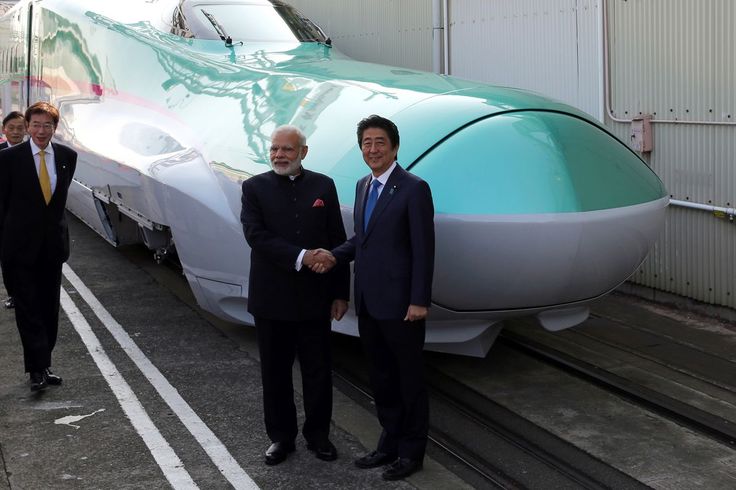
India’s bullet train project, officially known as the Mumbai–Ahmedabad High-Speed Rail Corridor (MAHSR), is a flagship infrastructure initiative under the National High-Speed Rail Corporation Limited (NHSRCL). Launched in 2017, the project is being developed with technological and financial assistance from Japan, adopting the renowned Shinkansen bullet train technology.
The 508-km corridor will feature 12 stations, covering key cities like Surat, Vadodara, and Anand, reducing travel time between Mumbai and Ahmedabad from 6–7 hours to about 2 hours. The trains will run on an elevated track, with advanced safety systems, dedicated tracks, and modern stations designed to global standards.
According to official updates, construction has accelerated, and the first operational stretch is expected to open by 2029, with full completion targeted by 2030–2031.
Types / Phases of Implementation
Phase 1: Surat to Bilimora (By 2029)
The first section expected to become operational will connect Surat and Bilimora, showcasing the capabilities of India’s new high-speed network.
Phase 2: Vadodara to Ahmedabad (By 2030)
Subsequent sections will extend the network toward Vadodara and Ahmedabad, bringing high-speed connectivity to major business hubs.
Phase 3: Mumbai Integration (By 2031)
The final phase will link Mumbai, completing the full 508-km stretch and unlocking the corridor’s full potential.
Benefits 🚀
The bullet train project is not just about speed — it’s a transformative leap for India’s infrastructure and economy.
🚀 Faster Travel: Reduce Mumbai–Ahmedabad travel time from 7 hours to around 2 hours.
💡 Economic Boost: Enhance trade and business connectivity between Maharashtra and Gujarat.
📈 Job Creation: Generate over 90,000 direct and indirect jobs during construction and operations.
🔒 Safety & Reliability: Advanced signaling and earthquake-resistant infrastructure ensure world-class safety standards.
🌐 Environmental Impact: Electrified trains will reduce carbon emissions compared to road and air travel.
Risks / Challenges
While the project promises significant benefits, it also faces several challenges:
Land Acquisition Issues: Delays due to land disputes, especially in Maharashtra.
High Costs: Estimated project cost exceeds ₹1.6 lakh crore, posing financial and budgetary challenges.
Technological Complexity: Integration of new Japanese systems into India’s rail network requires careful planning.
Timeline Delays: Initial 2023 deadline extended due to legal, logistical, and pandemic-related setbacks.
Case Study: Shinkansen Success in Japan
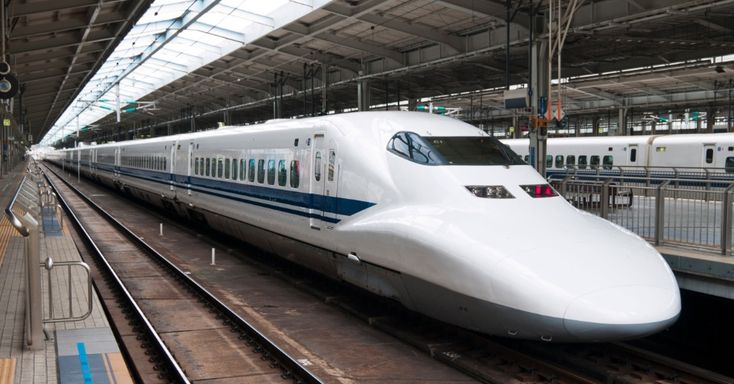
India’s bullet train project is modeled on Japan’s Shinkansen network, operational since 1964. The Shinkansen transformed intercity travel, significantly boosting economic growth and regional development. By adopting this model, India aims to replicate similar results, creating high-speed economic corridors and modernizing its rail infrastructure.
Conclusion ✅
India’s first bullet train is more than just a transport upgrade — it’s a bold step toward a modern, connected, and future-ready India. As the country moves closer to its 2029 phased launch, the project is set to redefine how Indians travel, boost the economy, and inspire further innovation in infrastructure.
👉 Stay tuned for updates as India enters the high-speed rail revolution and sets new benchmarks in transportation. 🌐
🌐 External Links
The Economic Times – Bullet Train Project Updates
India’s first bullet train 2029 See Other content
About the Author