
Introduction
Artificial intelligence in Business is no longer just a trend—it has become the backbone of modern workplaces. From automating daily operations to unlocking insights in big data, AI is changing how companies work. However, this shift also raises an important question: Will AI replace humans in business, or create smarter opportunities for them?
Thank you for reading this post. Don't forget to subscribe!
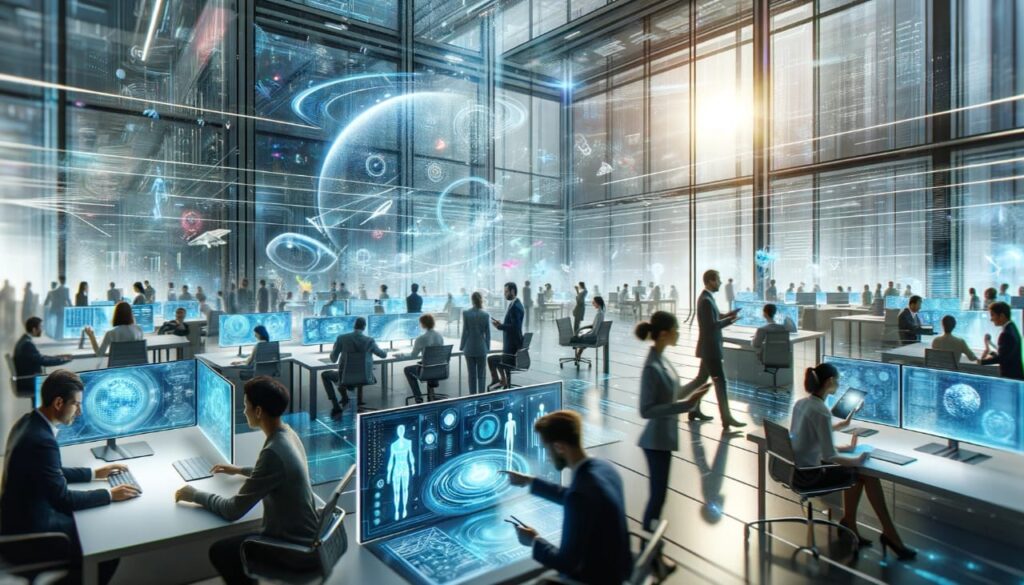
How AI in Business is Transforming Companies
1. Intelligent Decision Making
Businesses now use AI-driven analytics to predict customer needs and reduce risks. For example, retailers forecast demand using AI, while banks prevent fraud in real-time. Therefore, AI in Business helps companies act faster and smarter.
2. Next-Level Customer Service
From chatbots to virtual assistants, AI makes customer service quick and personalized. As a result, customers stay satisfied and loyal.
3. Automating Routine Work
AI in Business reduces repetitive tasks such as data entry, reporting, and scheduling. Consequently, employees can focus more on creative problem-solving and innovation.
4. Driving New Innovations
AI has enabled new solutions such as self-driving cars, smart healthcare tools, and personalized advertising. Clearly, Artificial Intelligence in Business is powering the next wave of innovation.
Trum Era Policy 👉 See more information
🔹 How Artificial Intelligence in Business is Changing Careers
1. Shifting Job Roles
AI does not only eliminate jobs—it transforms them. Traditional roles are evolving, while new ones like AI ethicists, machine learning engineers, and automation experts are rising.
2. Skills for the Future
To succeed in the AI era, workers need digital skills, data literacy, and critical thinking. At the same time, human qualities such as creativity, empathy, and leadership remain irreplaceable.
3. Remote and Hybrid Work
Artificial Intelligence in Business makes hybrid work easier with automated meeting notes, smart scheduling, and virtual collaboration. Thus, modern offices are becoming more digital-first than physical.
4. Rise of the Gig Economy
AI platforms connect freelancers with global clients. As a result, workers gain more flexible career options beyond the 9-to-5 structure.
India’s First Bullet Train to Start in Phases by 2029👉 See more
🔹 Challenges of AI in Business
Artificial intelligence in business
Job Loss Risk: Routine work may decline.
Skill Gaps : Workers must learn new skills.
Ethical Issues : Bias in algorithms and misuse of data.
Digital Divide : Lack of tech access leaves some people behind.
🔹 What Lies Ahead
Ai in Business will not simply replace humans. Instead, it will redefine how people and technology work together. Companies that adopt AI responsibly, and workers who keep learning, will succeed in the future.
Conclusion
Al I in Business is both a challenge and an opportunity. It is making organizations smarter, faster, and more creative, while also reshaping the way jobs are done. In the end, the future belongs to those who learn to work with AI—not against it.
👉 Your turn : Do you believe AI will create more opportunities than it removes? Share your thoughts in the comments!
Artificial intelligence in business
Future of work See Details
About the Author