Introduction
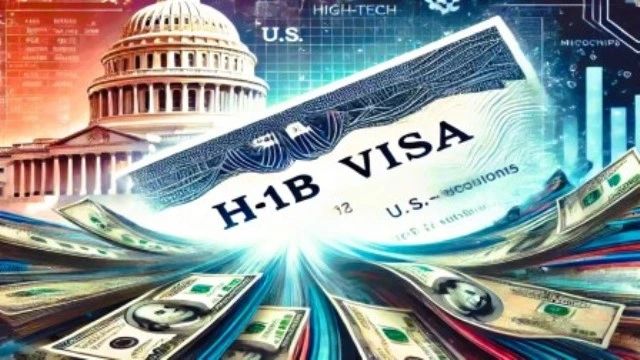
The United States government of former President Donald Trump has rolled out a contentious new policy: us changes h-1b visa fees. $100,000 on new application requests. Though it does not cover renewals for those already on active visas, the action has caused waves across world tech communities, particularly in India, where tech workers and their families count heavily on the H-1B channel to seek careers in the United States.
Thank you for reading this post. Don't forget to subscribe!
Why the policy matters
The H-1B visa has been the main portal for highly skilled international workers, especially Indians, to get into the U.S. tech and healthcare industries. These experts occupy high-demand positions for employers from Silicon Valley startups to Fortune 500 behemoths. An abrupt and steep introduction fee of $100,000 is not only a monetary burden but also a strong barrier to international talent mobility
Impact on Indian Tech Employees
Financial Burden: The fee, for young professionals and middle-class households, which want to work in the United States, is exorbitant. It may now exclude large numbers outright on the basis of affordability, rather than ability.
Talent Diversion: Rather than consider the U.S., Indian skilled labor might turn elsewhere to Canada, Britain, Australia, or Germany, where visa policies are still relatively open to them.
Emotional Stress on Families: For those families who had charted their destiny with American opportunities, this sudden shift fosters uncertainty and disillusionment.
Corporate consequences
The U.S. tech sector has already been complaining about talent scarcity. Much of U.S. innovation has been built on the back of Indian-origin engineers and software developers. By imposing such an outrageous hurdle, U.S. firms could see:
1.Lower talent inflow when demand for AI, cybersecurity, and software engineering is on the rise.
2.Higher costs if companies try to subsidize the most sought-after candidates’ fees.
3.Competitive disadvantage compared to international peers that enjoy better access to varied talent pools.
Broader Geopolitical Signals
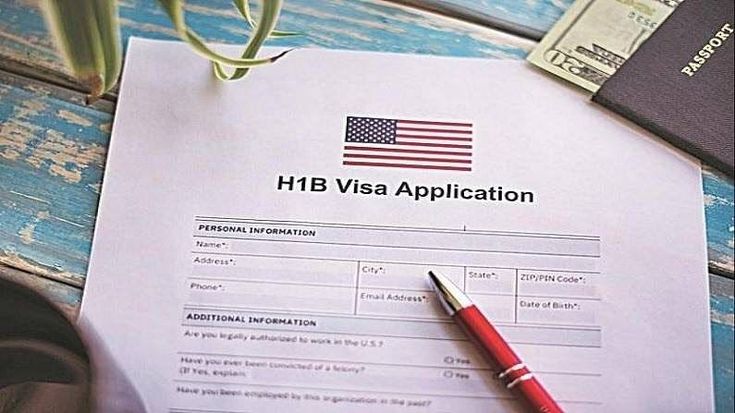
Apart from economics, the us changes h-1b visa is also a more protectionist direction for American immigration policy. It leaves one wondering how dedicated the U.S. is to being the world’s hub of innovation. For India, it could redefine bilateral relations and instigate discussion about mutual policies, academic exchange, or intensified domestic tech development to keep skilled people at home.
Voices of concern
Immigration lawyers and worker rights organizations in both nations have raised alarm. Opponents claim this fee essentially makes it an “elite-only” system under which only affluent professionals or companies with highly financed backers can apply. Supporters justify it as a means to “put Americans first” in the distribution of jobs and cut back on visa demand.
Looking ahead
The imposition of an H-1B entry fee of $100,000 is no minor tweak but a seismic realignment of the manner in which global talent flow has always functioned. While the renewals are not affected, the word to prospective applicants is unmistakable: the U.S. is no longer an open destination for professional aspirations, particularly for young Indian IT professionals. Whether this policy will stick under successive administrations or be challenged legally and diplomatically is to be seen. But for the moment, it has radically changed the math for thousands of Indian families who aspire to make a life in America.
know more about H-1B VISA
About the Author